
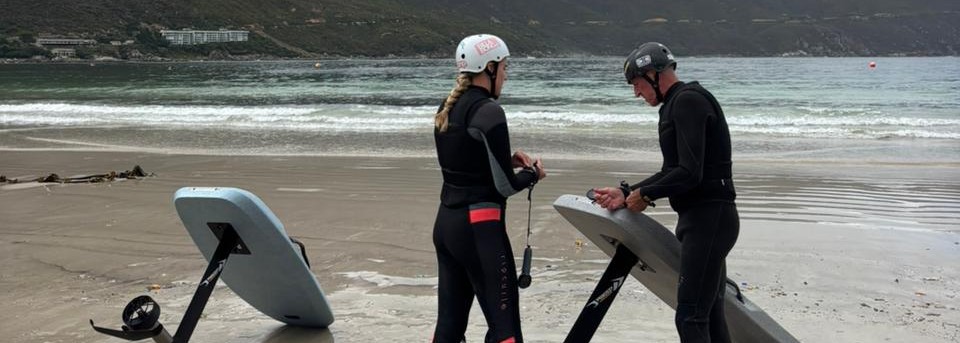

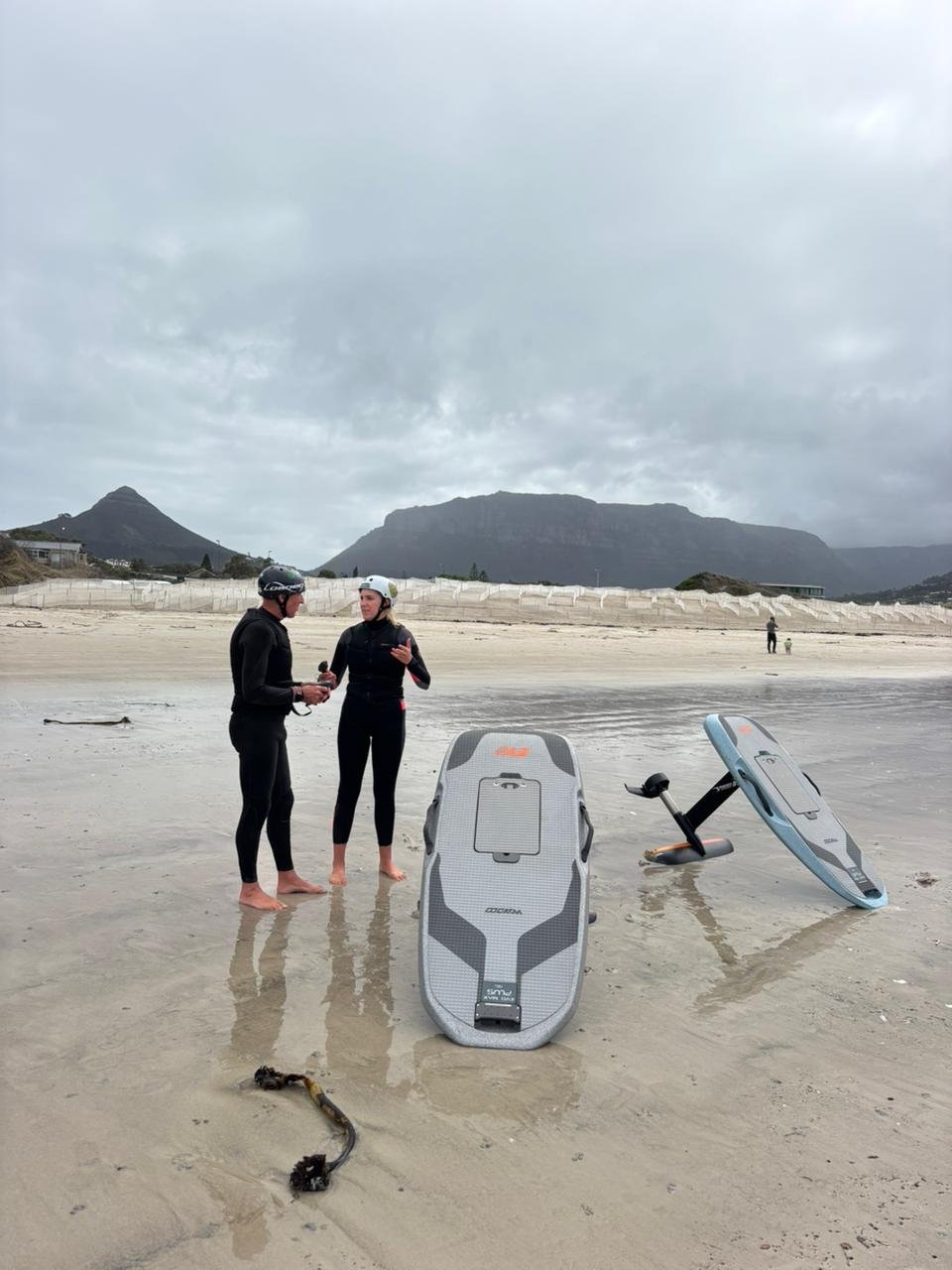
e-Foiling Instructor Course developed with BlueCape
A new e-foiling instructor course developed in partnership with BlueCape marks an important step in positioning Cape Town at the forefront of emerging marine sports training and innovation, and adds a new reason to study in Cape Town. As hydrofoil technology continues to reshape watersports globally, the need for structured instruction, safety standards and professional certification is becoming increasingly important.
E-foiling sits at the intersection of surfing, sailing and electric mobility. It is attracting rapid international growth, not only as a recreational activity but as a new discipline within watersports tourism and instruction. The development of a formal instructor pathway offers an opportunity to people entering the superyacht industry globally.
What the course teaches
The course has been designed to build both technical competency and instructional capability. Riders are trained in board control, foil dynamics, battery and propulsion systems, and water safety, alongside structured teaching methods that allow them to train new entrants to the sport. This dual focus is critical. As e-foiling expands, the industry requires instructors who can combine technical understanding with clear communication and strong safety awareness in a dynamic marine environment.
Why study in Cape Town for a career on the water
Cape Town provides a uniquely suitable training ground. Its varied coastal conditions, established watersports culture and strong marine services sector create an ideal environment for developing instructors capable of operating in diverse global locations. From sheltered waters to more challenging ocean conditions, trainees are exposed to a realistic range of environments that strengthen both confidence and competence.
Building high-value skills
The collaboration with BlueCape reflects a broader strategy of developing high-value skills. Beyond the immediate growth of e-foiling as a sport, there is clear potential for job creation, tourism development and exportable training expertise. Instructor certification opens pathways not only within South Africa but also into international markets where demand for qualified e-foiling professionals is increasing.
Cleaner, quieter marine recreation
There is also a wider industry impact. The integration of electric propulsion into watersports is part of a broader shift towards cleaner, quieter and more sustainable marine recreation. Training programmes such as this ensure that local operators are prepared for that transition, with the skills and knowledge required to support safe adoption and responsible growth.
As Cape Town continues to evolve as a marine innovation hub, initiatives like the e-foiling instructor course demonstrate how collaboration between industry and development agencies can create practical, commercially relevant outcomes. It is a small but significant example of how the region is building capability in emerging marine sectors.
This article has been adapted from the original piece published in This is Cape Town Magazine, Volume 7, specifically for the blog. To view the original article, click here or read the full magazine online at www.thisis.capetown/resources.
Share this blog
Published |
October 23, 2026


