
Opinion Piece by Alderman James Vos, Mayoral Committee Member for Economic Growth
Cape Town has just come off one of the strongest tourism years in its history. That’s something to be proud of, but it’s also a moment to pause and ask what comes next. Tourism doesn’t stand still, and neither can we if we want this sector to keep delivering jobs, opportunity and growth across our city.
This is why my team and I are currently putting the final touches on the new Tourism Framework for Cape Town, which will guide the next phase of growth in our visitor economy. The framework builds on extensive engagement across the sector and sets out the direction for how we position Cape Town to compete in an increasingly dynamic global tourism market.
The contribution of tourism to Cape Town’s economy is substantial. In 2024, more than 2.4 million overnight visitors came to our city, contributing R24,5 billion to the local economy and supporting over 106 000 jobs, nearly 7% of total city employment. Cape Town International Airport processed more than 11,2 million passengers last year, reflecting strong domestic and international demand.
But the questions I keep coming back to are these: what does longer stay actually look like in Cape Town? What does higher spend mean for local businesses and communities? And how do we grow visitor numbers while also increasing the value of tourism across the entire ecosystem?
These are not abstract questions. They go to the heart of how we grow the visitor economy in a way that is sustainable, competitive and inclusive.
One of the highlights of the past year was seeing This Is Cape Town campaign go live across six continents and 55 cities. It was a career highlight for me to see a campaign with Cape Town written all over it, confident, distinctive and unmistakably ours. I had the privilege of launching the campaign developed by my place-marketing team in the City’s Economic Development and Investment Department, reflecting a long-held ambition to position Cape Town boldly on the global stage.
That campaign continues to expand into new and innovative marketing spaces. A recent India-focused campaign generated more than 330 million impressions within a few months, supported by outdoor advertising in Mumbai. At the same time, my department is now running a targeted campaign in China on the WeChat platform, ensuring that Cape Town’s destination marketing reaches one of the world’s largest digital travel audiences.
We have also recently rolled out place-marketing initiatives in New York, where the iconic yellow taxis were branded with Cape Town imagery and QR codes. These codes allow commuters to scan directly to our social media platforms, where they can discover the city and connect with travel opportunities that ultimately convert into bookings.
In addition, outdoor advertising has been placed at key sites in New York, including around the Convention centre. In London, our campaign includes branding on the famous black cabs in partnership with an airline, again featuring QR codes that guide potential travellers directly to Cape Town’s digital platforms.
For me, this approach is critical. Place marketing must ultimately drive real economic activity, converting interest into bookings for our hotels, guesthouses, restaurants, attractions, tour operators and conferencing venues across Cape Town.
At the same time, air connectivity remains central to our approach. Cape Town is now connected to 32 global destinations, with up to 230 international flights landing each week during peak periods.
What makes this growth particularly encouraging is the progress we’ve seen over the past decade. In 2015, Cape Town was connected to just 16 international destinations, with around 120 weekly international flights. Today, those numbers have almost doubled.
This progress is the result of sustained collaboration through our Air Access initiative, and I must say it is incredibly rewarding for me to be part of the team that sits down with airlines to negotiate new routes and strengthen bilateral partnerships that bring more flights to our city.
Every new route strengthens tourism, trade and investment.
But growing tourism is not only about numbers. It is also about defining what success looks like.
For Cape Town, success means longer stays, higher visitor spend and more opportunities for local businesses and workers throughout the tourism value chain. It means ensuring that growth in the visitor economy translates into jobs for Capetonians, from hospitality and guiding to retail, transport and creative industries.
Success also means positioning Cape Town for the future of travel.
Increasingly, tourism competitiveness will be shaped by how destinations use technology, artificial intelligence and digital platforms to connect with travellers. From smarter destination marketing to improved search optimisation and streamlined visitor information across multiple channels, the cities that win in tourism will be those that make it easier for travellers to discover, plan and experience what they offer.
Cape Town is already moving in that direction, strengthening its digital presence and sharpening its value proposition so that the city stands out in a crowded global marketplace.
At its core, the Tourism Framework for Cape Town is about turbocharging the city’s visitor economy by growing both volume and value, while managing Cape Town as a well-run destination.
It is also about breaking through into new and growing markets. I am particularly interested in seeing how we expand tourism flows from across Africa, India and China, while building on strong markets such as the United Kingdom, Europe, the Middle-East and North America. The recent introduction of a direct flight connecting Brazil to Cape Town also opens exciting opportunities to grow arrivals from South America, and we will continue working to attract additional international routes that strengthen these links.
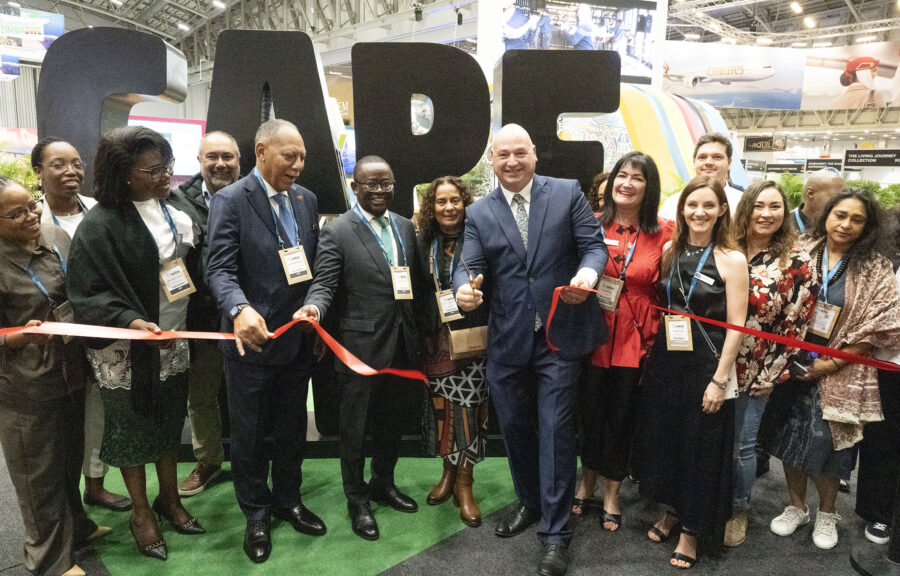
In April, at World Travel Market Africa at the Cape Town International Convention Centre, where the City of Cape Town is the proud host city, I will outline more detail on what this framework means in practice. That includes the targets and indicators we will use to measure success, from increasing visitor numbers to expanding employment across the tourism value chain.
Tourism supports livelihoods across our city, and when managed well, it becomes one of the most powerful engines of economic opportunity we have.
Our task now is to ensure that Cape Town continues to compete, innovate and lead as a world-class destination, while making sure the benefits of tourism reach deeper into our communities and create more opportunities for the people who call this remarkable city home.