

Streets for People: Inside Cape Town’s Bree Street Sundays Experiment
Rethinking Who Streets Are For
Cape Town, like most international cities, is urgently rethinking who roads are for beyond private cars. Over the past four years, the City of Cape Town, particularly through the Urban Mobility Directorate, has initiated a series of reforms grounded in evidence-based planning. These reforms have culminated in the Walking and Cycling Strategy and supporting frameworks such as the Comprehensive Integrated Transport Plan, which recognise that building more road space for cars or adding dedicated turn lanes ultimately worsens congestion.
As Cape Town attracts increased investment and more people choosing to call the Mother City home, bold action is required. This action must be backed by strong political will and sound evidence to not only manage congestion, but to create a city that is safer, more equitable, climate- and biodiversity-resilient, and ultimately more liveable. While these ambitions are often articulated in vision documents, they are most directly realised through better transport systems and, critically, through how streets are designed.
Young Urbanists, together with its many partners, has positioned itself as a reliable, sometimes vocal, but pragmatic and supportive voice in this challenging transition. Its work focuses on helping local municipalities, including the City of Cape Town, rethink how transport systems and streets can contribute to a city of hope.
Bree Street Sundays
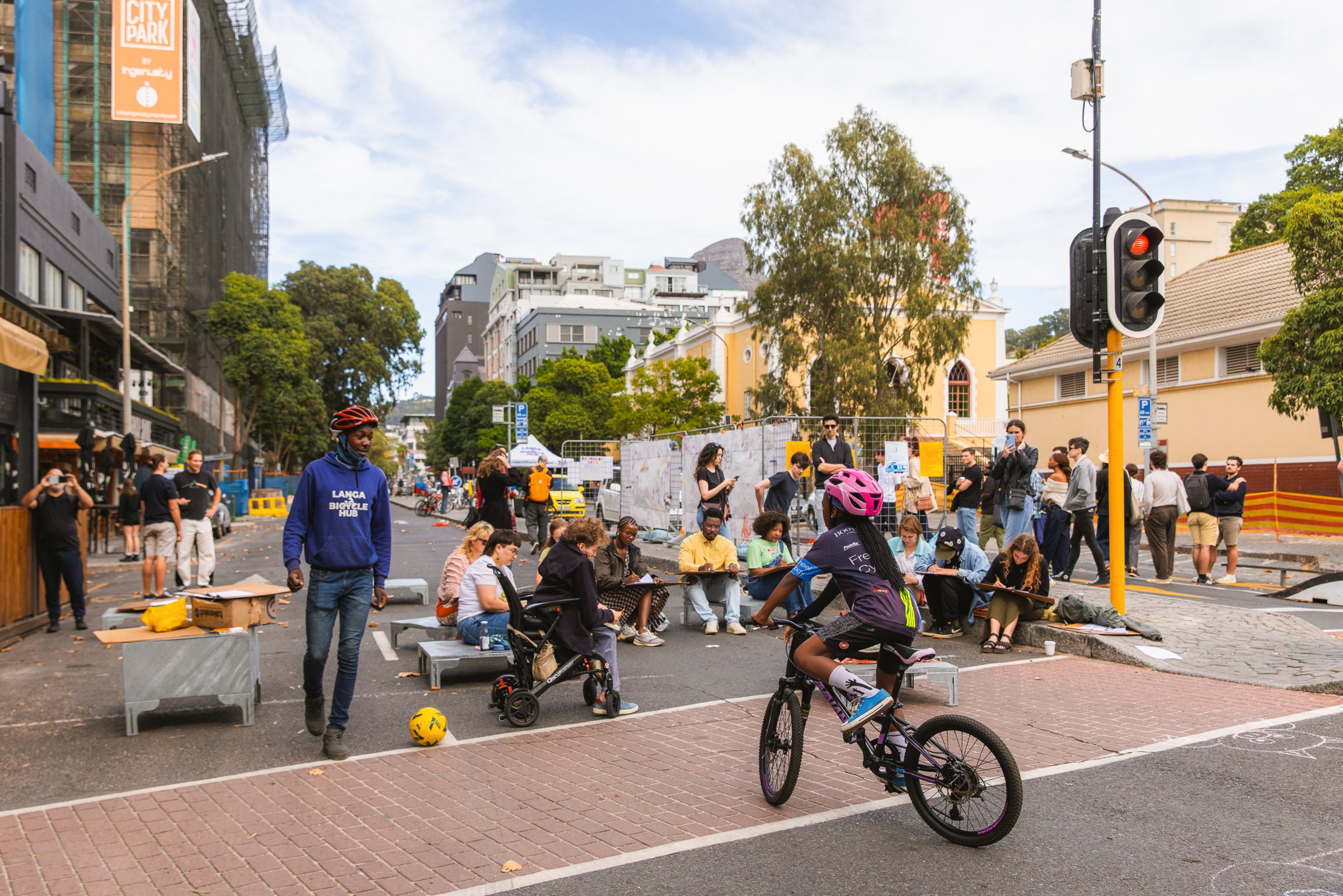
The most significant partnership to date is Bree Street Sundays, a collaboration between Young Urbanists, the Executive Mayor’s Office, and Urban Mobility, with support from additional government departments and public–private partnerships including the Safe Passage Programme and Mission for Inner City Cape Town. Now entering its second year, Bree Street Sundays enabled, for the first time, more than 30 consecutive Sundays of closing a major inner-city street without an event permit. This simple intervention emerged from the legacy of Open Streets Cape Town and aimed to challenge South Africans’ relationship with cars and reframe who streets are for.
Bree Street Sundays demonstrated how a typically quiet day in the city could be transformed into a vibrant public space. Increased footfall translated into higher turnover for hospitality and retail businesses, while residents and visitors experienced the street as a place for play, conversation, and safe cycling, particularly for children. Anyone looking to visit Cape Town on a Sunday now has a genuine reason to head to Bree Street and see it for themselves — proof that reallocating street space can generate both social and economic value.
Building on this, Young Urbanists has expanded Open Street Experiments to Langa in Cape Town, Kerk Street Sundays in Stellenbosch, and Main Street Sundays with JOZI MY JOZI in Johannesburg. Beyond temporary closures, the next challenge was exploring how these principles could be applied every day, allowing better-designed streets to be experienced as part of daily life rather than only on special occasions.
From Weekly Closures to Everyday Redesign
Through the Urban Design and Mobility Forum, again in partnership with the Executive Mayor, Young Urbanists began exploring tactical street redesign as an everyday intervention. Following sustained engagement, the Urban Mobility Directorate developed a plan within seven weeks to tactically redesign Bree Street by narrowing vehicle lanes. This intervention, scheduled for implementation later in 2026, forms part of the Safe Passage Programme, founded by SDI Trust in partnership with Young Urbanists.
This project will mark South Africa’s first everyday street experiment, reflecting innovative thinking within the City and alignment with the Mobility and Accessibility Map, alongside meaningful support from the private sector. It will demonstrate how streets can function as economic catalysts while contributing to the reduction of road fatalities by reducing lane widths and vehicle speeds. Road trauma currently costs the South African economy more than R200 billion annually.
A Culture of Collaboration
Cape Town is again demonstrating that streets are for people. Importantly, these lessons must be institutionalised and reflected in future budgets and implementation frameworks. This progress has been made possible through a strong culture of collaboration across public, private, and civil-society actors.
Earlier in 2025, Young Urbanists delivered a Safe Passage partnership with Urban Mobility to upgrade an unprotected cycling lane by installing dedicated bollards and kerbs. This intervention improved safety, prevented illegal parking, and directly supported more than 800 Green Riders using e-bikes for deliveries. The long-term aim is to connect the inner city with Langa over the next two years.
Beyond street design, Young Urbanists has also supported improvements in public transport accessibility, including enabling Western Cape PRASA integration with Google Maps. Later this year, an industry-wide programme addressing last-mile delivery challenges will launch, founded by Takealot with Mr D, in partnership with Young Urbanists.
Roads and transport systems can unlock significant economic, social, and environmental opportunities. Through collaboration and partnership, Cape Town is showing how this potential can be realised — and why it’s such a rewarding time to visit Cape Town and experience its streets firsthand.
Roland Postma is the managing director of Young Urbanists NPC. He believes both street experiments and collaborations can bring positive change by rethinking how we use roads to solve our many crises.
This article has been adapted from the original piece published in This is Cape Town Magazine, Volume 6, specifically for the blog. To view the original article, click here or read the full magazine online at www.thisis.capetown/resources.
Share this blog
Published |
July 29, 2026