



If you live in Cape Town, your experience depends heavily on where you live, how you travel, what you earn, and what kind of daily rhythm you want. For many people, the city offers a rare mix of work, natural beauty, culture, and neighbourhood variety. It also comes with real trade-offs, including traffic, uneven public transport, and a cost of living that can feel steep in more popular areas.
Cape Town can give you a high quality of life, but it is not one thing to everyone. It can feel relaxed or fast-paced, convenient or frustrating, accessible or expensive. The point is not whether the city is universally “good” or “bad” to live in. The better question is whether it suits the kind of life you want to build.
In this article we aim to answer some of the more frequently asked questions about Cape Town life, and what it’s like to live in Cape Town.
Key takeaways
- Cape Town offers very different lifestyles across different areas.
- Your budget shapes your experience more than people admit.
- Many people enjoy a strong lifestyle, but convenience varies.
- Safety matters, and local awareness is part of daily life.
- Public transport works in some contexts, but not all.
- Traffic can be a real issue, especially across longer commutes.
- Cape Town appeals to families, professionals, creatives, and remote workers.
- The city rewards informed choices about area, budget, and routine.
Explore: Why live in Cape Town?
Is Cape Town a good place to live?
Yes, for many people it is. But the better answer is that Cape Town can be a very good place to live if your expectations are realistic and your living situation suits your needs.
What makes it appealing is the fact that many residents can build a life that includes access to beaches, mountain routes, public spaces, restaurants, schools, cultural activity, and established business nodes, often within the same metro. That combination is unusual.
At the same time, living here is not automatically easy. Rent can be high in the most sought-after areas. Transport can be frustrating if you need to cross the city every day. Infrastructure and service delivery experiences can vary by area. Safety is part of how people think and plan.
So yes, Cape Town can be a good place to live. It is just better understood as a city of trade-offs rather than a simple lifestyle fantasy.
What is day-to-day life in Cape Town actually like?
Day-to-day life in Cape Town is often more practical than outsiders expect. Most residents are not spending every day on a beach or a mountain trail. They are working, commuting, doing school runs, managing costs, planning around traffic, and fitting leisure into the gaps.
What makes the city distinctive is that ordinary life often happens close to extraordinary surroundings. You might work in a busy office precinct, take a call from a café, collect your children from school, and still end the day with a walk on the promenade, a park visit, or a view of the mountain on the way home.
That balance is part of the draw of living in Cape Town. Cape Town can feel more spacious and more visually rewarding than many cities, even when daily life is still very much about routine and responsibility.
What is the lifestyle in Cape Town like?
The lifestyle depends on your area, your income, and your priorities. For some people, Cape Town is active, nature and outdoors-driven, social, and flexible. For others, it is family-oriented, school-centred, and suburb-focused. For others still, it is work-heavy, traffic-heavy, and shaped by the pressure of housing costs.
There is no single Cape Town lifestyle. There are many versions of it.
What the city does offer is range. You find neighbourhoods that feel urban, coastal, quiet, creative, practical, residential, or business-led. You can live close to nightlife, close to schools, close to green space, or close to office hubs. Not everyone can afford every version of Cape Town, but the city’s variety is one of its biggest strengths.
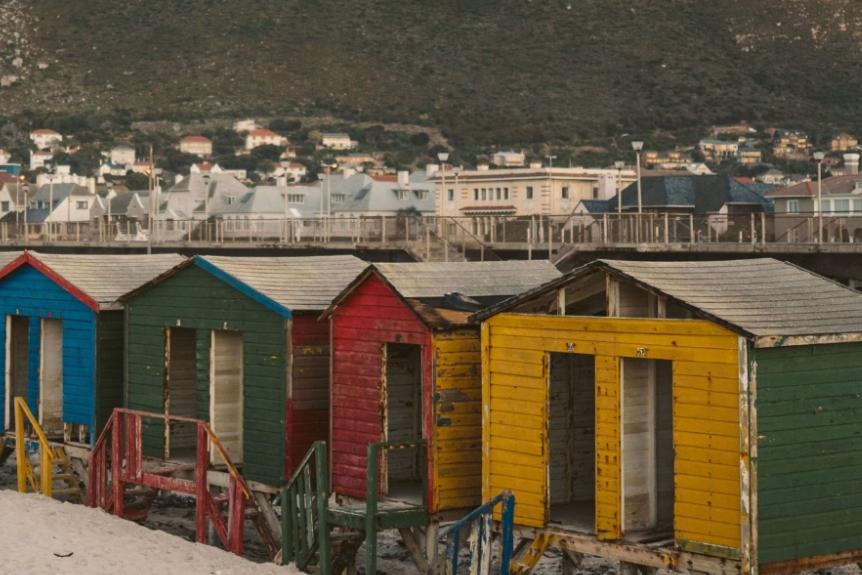
Where do most expats live in Cape Town?
Many Expats gravitate towards areas that offer convenience, established amenities, and easier access to work, social life, or scenic surroundings. In practice, that often means parts of the City Bowl, Atlantic Seaboard, Southern Suburbs, and some lifestyle-oriented coastal or village-style areas.
That said, there is no single foreigner area. Some people prioritise walkability. Others prioritise schools. Others want more space, quieter streets, or better value.
The more useful question is not where expats live, but what kind of daily life you want. Cape Town works best when you choose an area based on how you actually plan to live.
What should you know before moving to Cape Town?
You should know that Cape Town rewards good local decisions. A suburb that looks ideal on a map may not suit your commute. An area that seems affordable may become less practical once transport costs are added. A neighbourhood that feels exciting for a short stay may not be the best fit for long-term family life.
Things to consider before moving to Cape Town
- where you will work
- whether you need a car
- what you can comfortably afford
- what kind of school access you need
- how important walkability is to you
- what kind of routine you want during the week
Cape Town is easier to enjoy when your housing, transport, and work setup align.
How expensive is it to live in Cape Town?
Cape Town can be expensive when compared to other South African cities, especially in well-known and high-demand areas. Housing is usually the biggest pressure point, particularly for people who want to live close to major employment nodes, the coast, or established lifestyle areas.
The city includes a wide range of living costs, but affordability is relative. Two people can have completely different views of Cape Town’s cost depending on where they live, whether they own or rent, whether they commute by car, and what they expect from daily life.
In general, the city can feel expensive if you are trying to access the most visible version of Cape Town. It can feel more manageable when you are flexible about area and lifestyle.
What salary do you need to live comfortably in Cape Town?
There is no single number that applies to everyone, because “comfortable” means different things to different households. If you are living alone, comfort will depend on whether you are renting a small apartment or a larger home, whether you live close to work, and whether you carry the cost of a car. If you are supporting a family, school fees, transport, healthcare, and space requirements change the picture significantly.
A better way to think about it is this: to live comfortably in Cape Town, you usually need enough income to cover housing, transport, food, utilities, healthcare, and a margin for social life or savings without constant pressure. That threshold rises quickly in the city’s more popular areas.
Can you live comfortably in Cape Town?
Yes, many people do. But comfort in Cape Town is less about a fixed income bracket and more about alignment between your budget and your choices.
If you choose an area that matches your real needs, manage your commute well, and avoid stretching too hard for a postcode, the city can offer a very comfortable lifestyle. If your costs are concentrated in rent and travel, even a decent income can start to feel thin.
Comfort here is not only financial. It is also about time, convenience, and how much friction there is in your day.
What is the cost of rent in Cape Town?
Rent varies sharply by area, property type, and proximity to lifestyle or business hubs. The best-known neighbourhoods usually command the highest rents, especially if they offer views, walkability, coastal access, or short commutes.
That is why broad rent conversations can be misleading. Cape Town is not one rental market. It is many.
If you want lower rent, you may need to compromise on commute time, proximity to the city, or access to certain amenities. If you want convenience, centrality, or coastal living, expect to pay more.
Is Cape Town safe to live in?
Cape Town is a city where safety matters, and most residents factor that into everyday decision-making. The honest answer is that safety is not something you can ignore, but it is also not something that makes normal life impossible.
Experience varies by area, time of day, and behaviour. Many people live full, active lives in Cape Town while staying aware of where they are, how they move around, and what precautions they take. That kind of practical awareness is part of city life here.
It is more accurate to say that Cape Town requires local awareness than to make sweeping statements that flatten the city into either “safe” or “unsafe”.
What areas should you stay away from in Cape Town?
This question is common, but it is better handled with care. The most useful answer is that you should not make decisions based on simplistic lists alone. Safety in Cape Town is shaped by context, local knowledge, time of day, route choice, and the difference between passing through, visiting, and living in an area. Broad assumptions can be misleading.
If you are considering a move, it is more helpful to research specific neighbourhoods carefully, speak to people who know them well, and assess daily practicality, not just reputation.
Can you live in Cape Town without a car?
In some parts of Cape Town, yes. In others, it is much harder.
Cape Town is not as easy to navigate without a car as some denser global cities. Many residents still rely heavily on their own cars.
If you live and work in well-connected areas, rely on ride-hailing services, and keep your routine fairly compact, car-free living is possible. It becomes more difficult if you have children, need to move across multiple parts of the city regularly, or live far from work and services.
What is public transport like in Cape Town?
Public transport in Cape Town is a mix of formal, tourist-friendly services and faster, more local informal options.
- MyCiTi buses are the city’s most reliable and user-friendly public transport system. It is a scheduled, card-based bus service that covers key areas such as the city centre, Sea Point, Hout Bay, and Cape Town International Airport. You need to buy a MyCiTi card and load money onto it at stations like Civic Centre or selected retailers.
- Minibus taxis are the most widely used form of transport for many locals. They are cheap, frequent, and often faster for everyday commuting, but they do not follow strict schedules and may stop anywhere along the route. For many visitors, they can feel less predictable and less comfortable than formal transport options.
- Metrorail trains can be scenic, especially on the Southern Line towards Kalk Bay and Simon’s Town, but they are generally slower and reliability can vary.
- Uber and Bolt are not public transport, but they are widely used across Cape Town because they are convenient, relatively affordable, and often seen as a safer option, especially for tourists and expats.
- For sightseeing, the City Sightseeing hop-on hop-off bus is a useful option if you want to visit major attractions in a simple, tourist-friendly way.

What is traffic like in Cape Town?
Traffic in Cape Town is not the same everywhere, but it is serious enough to shape your quality of life. It can be heavy, especially during morning and evening rush hour. It is one of the main factors that affects daily life in the city. Particularly if you live far from work, school, or the places you visit often.
According to TomTom’s 2025 Traffic Index, Cape Town’s average congestion level was 42.1%. The average 10 km trip took about 24 minutes and 54 seconds across the year. In rush hour, that increased to about 25 minutes and 58 seconds in the morning and 28 minutes and 42 seconds in the evening. Drivers also lost around 77 hours to rush-hour traffic over the course of the year.
Cape Town is a spread-out city, so commute time often matters more than distance. A route that looks short on a map can take much longer in peak traffic, especially on major roads and highways. That is why many people choose where to live based not only on cost or lifestyle, but also on how much driving they will need to do every day.
Is Cape Town a good place for remote workers?
Yes, Cape Town can be a very good place for remote workers, especially if you want a mix of city convenience, natural beauty, café culture, and neighbourhood choice. It suits people who want a lifestyle built around work, but not limited to work.
English is the main business language, Cape Town is digitally connected, and our time zones are well aligned with Europe and the UK. You can structure your day around meetings and still access beaches, mountain walks, cafés, coworking spaces, and a strong social rhythm in many parts of the city. This is one of the main reasons Cape Town continues to appeal to expats working remotely.
As a practical note, for expats who want to work remotely in Cape Town, you will need a digital nomad visa or remote work visa, short and long stay visas, and to be compliant with South African tax requirements for foreign remote workers.

Is Cape Town a good city for families?
For many families, yes. Cape Town offers a wide range of neighbourhoods, schools, parks, recreational spaces, and residential environments that support family life.
The family experience varies a lot by area. Some neighbourhoods are valued for schools and green space. Others for larger homes, quieter streets, or easier access to amenities. Cost, commute time, and support systems all affect whether the city feels manageable for a household.
So yes. Cape Town can be an excellent city for families, but living here works best when daily logistics are well considered.
How easy is it to make friends in Cape Town?
This depends partly on your life stage and partly on how you build community. Some people find Cape Town warm and socially open. Others find it easier once they are connected through work, neighbourhood life, schools, hobbies, sport, faith communities, or professional circles.
Like many cities, social life is often easier when you make regular contact part of your routine. The city has strong communities, and hosts many great events, but connection is not always automatic. Bear in mind that a feeling of “belonging” usually grows through repeated participation, rather than quick social interaction.
What are the downsides of living in Cape Town?
The city has real downsides, and it is better to say so plainly. Housing can be expensive. Traffic can wear you down. Public transport may not suit your routine. Safety requires awareness. Some parts of the city feel far apart in both distance and lived experience. Depending on your budget, the version of Cape Town you imagine may not be the one you can easily access.
None of this cancels out the city’s strengths. It simply means you are more likely to enjoy Cape Town when you approach it with realism.
Which is nicer, Cape Town or Johannesburg?
That depends on what you value. If you care more about access to nature, coastal scenery, and neighbourhoods shaped by landscape and leisure, Cape Town will often feel more appealing. If you care more about pace, and a different kind of urban energy, Johannesburg may suit you better.
Cape Town is often described as more lifestyle-led. Johannesburg is often described as more work-led. That is a simplification, but it captures something real. “Nicer” is not an objective category here. It is a question of fit.
So, what is it really like living in Cape Town?
Living in Cape Town can be deeply rewarding. It is a city where beauty, history, and practicality sit side by side. Where nature reserves, farmlands, commercial and residential areas are only a short distance apart. If your budget, area, and routine line up well, it can offer a very strong quality of life. If they do not, the strain becomes obvious pretty quickly.
The most useful way to think about what it’s like to live in Cape is this: Cape Town can be an excellent place to live. However, only if you choose deliberately, remain realistic, and build a version of city life that actually fits your needs.
So, if you are thinking seriously about living in Cape Town, it helps to move beyond the postcard or holiday version of the city. The better questions are more practical ones: where you will live, how you will travel, what you can afford, and what kind of life you want from the city. The more honest your expectations, the better your chances of finding a part of the city that genuinely fits.
Continue exploring life in Cape Town
- Show me golf in Cape Town
- Show me ocean sports in Cape Town
- Show me cycling in Cape Town
- Show me Cape Town in 360


